

Viadukt Thin Italic
Viadukt Extra Light Italic
Viadukt Light Italic
Viadukt Regular Italic
Viadukt Book Italic
Viadukt Medium Italic
Viadukt Bold Italic
Viadukt Extra Bold Italic
Viadukt is not a revival project and does not reference an existing typeface. It can instead be seen as an experiment exploring what happens when expressive flourishes and ornamental gestures—which we might typically associate with Art Nouveau—subtly find their way into the rational system of the classic Grotesk genre. Viadukt literally bridges the gap between expressive movements and modernist clarity. Hence its name. It can be Used for both body copy and display purposes, as its details blend well in text and, when used at larger sizes, create a unique typographic image. As stylistic alternates, it includes a stylistic set in which all diagonals of the letterforms can be converted into curved strokes.
Regular
Regular
n
AB©
CRYME
TIME
Extra Light & Italic
1. Internationales
Ornamental-
Verbot von 1972
Book
A viaduct is a long bridge made of a series of arches, piers or columns that carries a railway or a road across a valley, a river, another road or any other stretch of low ground. It usually connects two points of about the same height, so that the route can stay level instead of dropping into the valley and climbing out again. The word is put together from the Latin words for road and to lead. It was coined in the nineteenth century, modelled on the aqueducts of the Romans, and many early viaducts resembled them: a row of arches of roughly equal span. Structurally, a viaduct is a matter of repetition. Many low supports carry one continuous deck, and because the individual spans are short and the structure is not high, temporary falsework can usually be used while it is built. The typical materials are masonry, reinforced concrete and prestressed concrete. Some viaducts have two levels, like the Prince Edward Viaduct in Toronto, which carries a street on top and a subway line underneath across the valley of the Don River. Railways profit most from the idea, since trains need routes that are straight and flat. In rail hubs such as Chicago, Birmingham, London and Manchester, viaducts lift the tracks over rail yards and multi-track lines and separate the levels, so that road traffic is never interrupted. Where a viaduct crosses water, it is often combined with a bridge or a tunnel, because the low spans rarely leave enough clearance for large ships. The Pont Serme in southern France may have been the longest viaduct of antiquity, about 2,679 metres long and 22 metres wide. The Laigh Milton Viaduct in Ayrshire, built in 1812, is the oldest surviving railway bridge in Scotland. The Millau Viaduct in France, opened in 2004, has a pier that rises 343 metres, which makes it the tallest vehicular bridge in the world. Not every viaduct stays. The Alaskan Way Viaduct in Seattle was closed in 2019 and replaced by a tunnel because it was not safe in an earthquake, and the Embarcadero Freeway in San Francisco was taken down after the quake of 1989 damaged it. Others find a second life. The Viaduc des Arts in Paris, opened in 1993, carries a garden promenade on top, with workshops in the arches below, and the High Line in Manhattan, an elevated rail line, became a linear park in 2009. The spaces beneath the arches are used too: in Britain, Network Rail leases them for car parking, repair shops, light industry and bars, and in Berlin the arches under the elevated S-Bahn hold restaurants and bars.
Medium
Regular & Italic
ANVERS
→KYIV
NEW YORK
VIENNA
Joseph Maria
Olbrich,
Inseratentwurf
für die Firma
Dziedzinski und
Hanusch, 1899
Medium
Ragtime
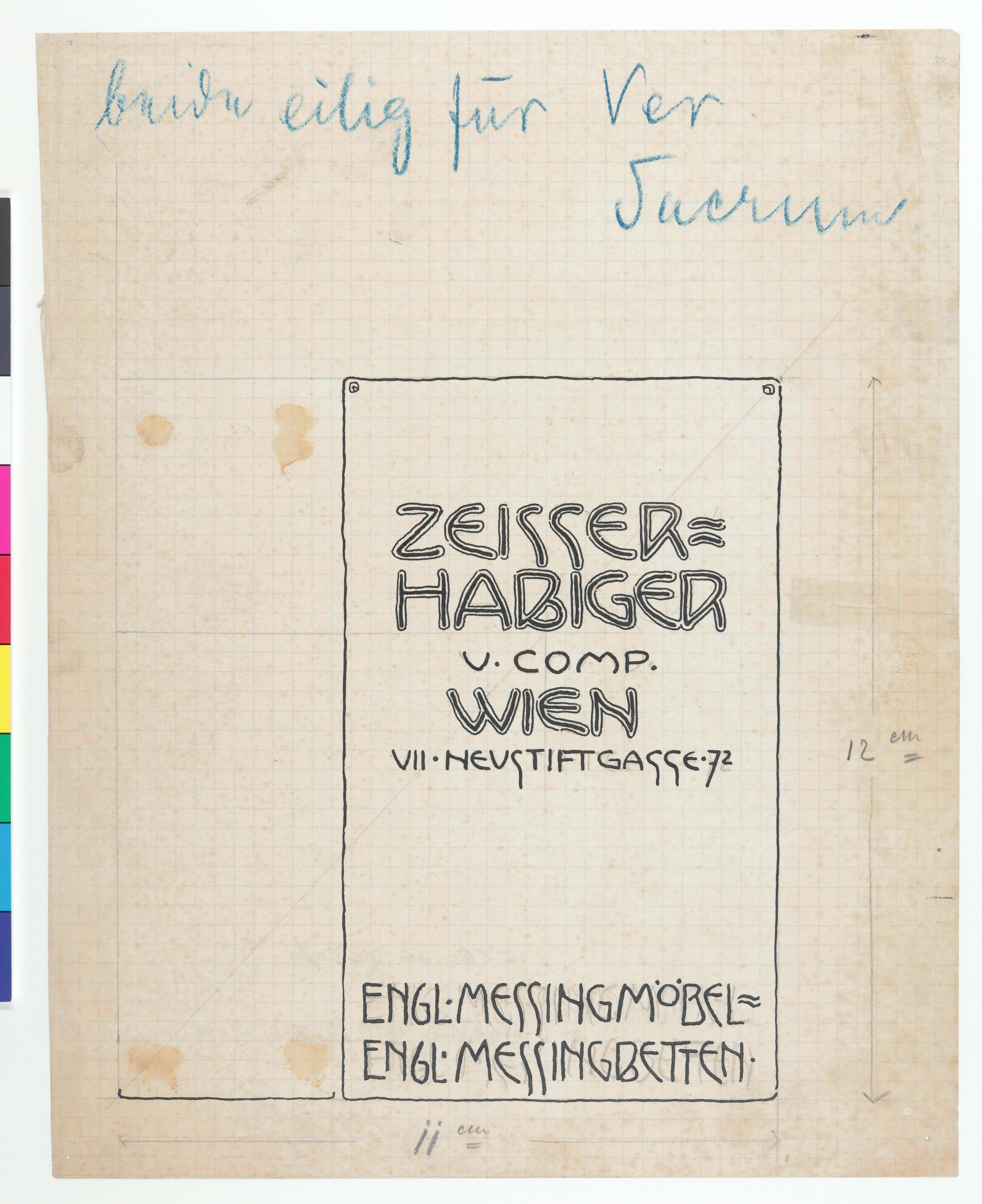
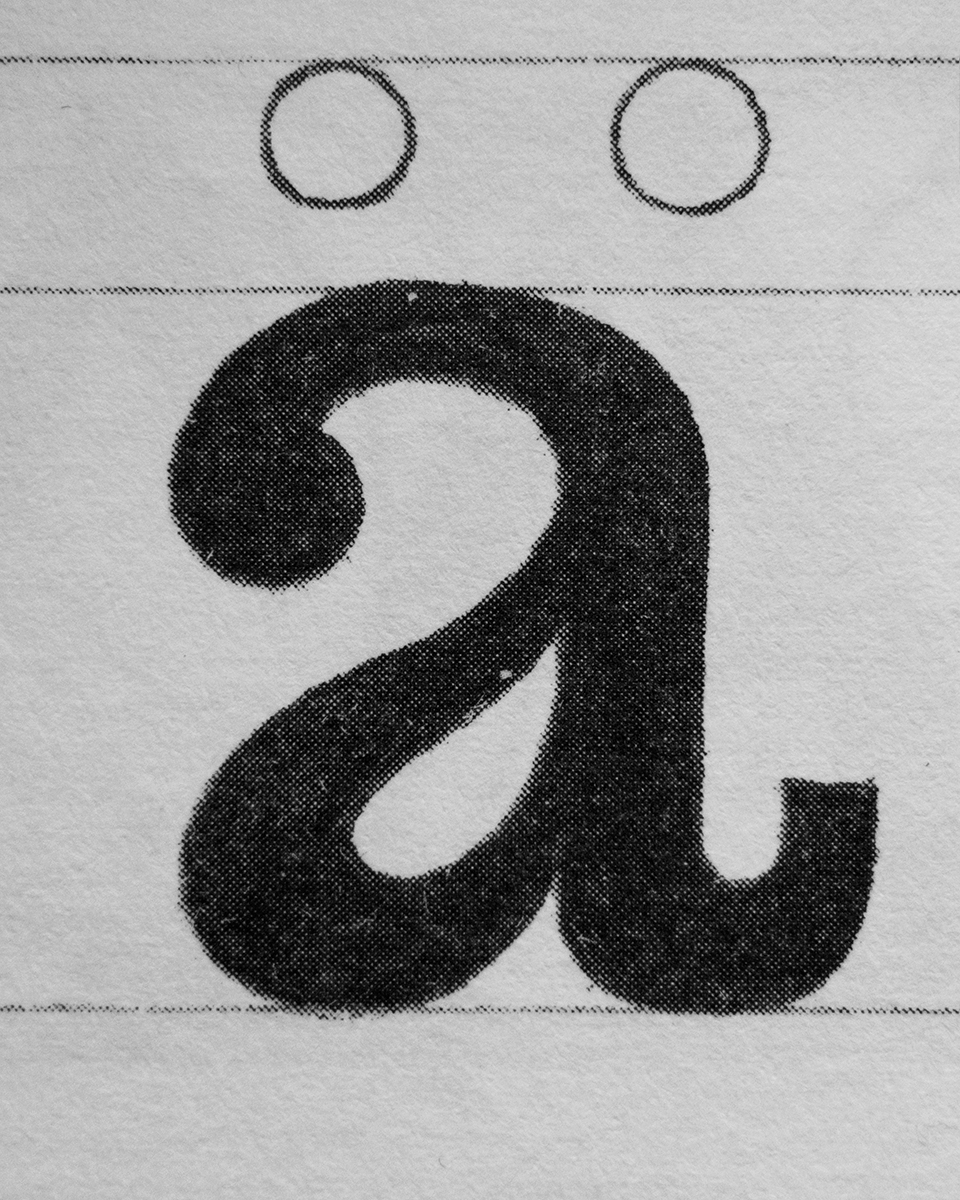
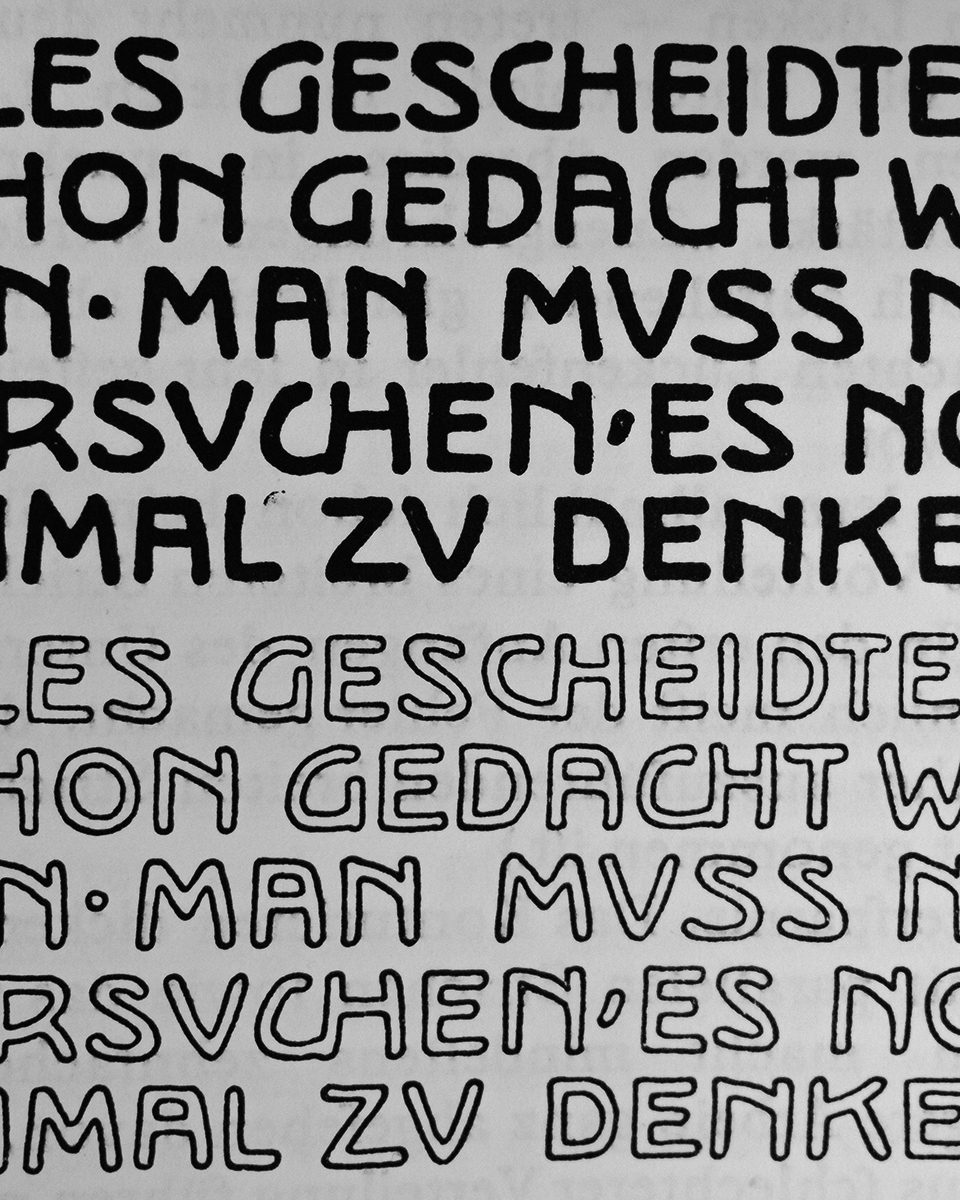
Joseph Maria Olbrich,
Entwurf für das Inserat der Firma Zeisser-Habiger u. Comp.,
gezeichnet für Ver Sacrum, 1899
Secession Online Archive
The curved stems and lines from a model by Heinrich Hußmann,
"Über die Schrift" (Guido Pressler Verlag, 1977)
Excerpt from Rudolf Larisch’s Unterricht in Ornamentaler Schrift
(Zehnte Veränderte Auflage Öst. Staatsdruckerei, Wien 1929)
Viadukt Thin Italic
Viadukt Extra Light Italic
Viadukt Light Italic
Viadukt Regular Italic
Viadukt Book Italic
Viadukt Medium Italic
Viadukt Bold Italic
Viadukt Extra Bold Italic
Viadukt is not a revival project and does not reference an existing typeface. It can instead be seen as an experiment exploring what happens when expressive flourishes and ornamental gestures—which we might typically associate with Art Nouveau—subtly find their way into the rational system of the classic Grotesk genre. Viadukt literally bridges the gap between expressive movements and modernist clarity. Hence its name. It can be Used for both body copy and display purposes, as its details blend well in text and, when used at larger sizes, create a unique typographic image. As stylistic alternates, it includes a stylistic set in which all diagonals of the letterforms can be converted into curved strokes.
Regular
n
Regular
AB©
CRYME
TIME
Extra Light & Italic
1. Internationales
Ornamental-
Verbot von 1972
Book
A viaduct is a long bridge made of a series of arches, piers or columns that carries a railway or a road across a valley, a river, another road or any other stretch of low ground. It usually connects two points of about the same height, so that the route can stay level instead of dropping into the valley and climbing out again. The word is put together from the Latin words for road and to lead. It was coined in the nineteenth century, modelled on the aqueducts of the Romans, and many early viaducts resembled them: a row of arches of roughly equal span. Structurally, a viaduct is a matter of repetition. Many low supports carry one continuous deck, and because the individual spans are short and the structure is not high, temporary falsework can usually be used while it is built. The typical materials are masonry, reinforced concrete and prestressed concrete. Some viaducts have two levels, like the Prince Edward Viaduct in Toronto, which carries a street on top and a subway line underneath across the valley of the Don River. Railways profit most from the idea, since trains need routes that are straight and flat. In rail hubs such as Chicago, Birmingham, London and Manchester, viaducts lift the tracks over rail yards and multi-track lines and separate the levels, so that road traffic is never interrupted. Where a viaduct crosses water, it is often combined with a bridge or a tunnel, because the low spans rarely leave enough clearance for large ships. The Pont Serme in southern France may have been the longest viaduct of antiquity, about 2,679 metres long and 22 metres wide. The Laigh Milton Viaduct in Ayrshire, built in 1812, is the oldest surviving railway bridge in Scotland. The Millau Viaduct in France, opened in 2004, has a pier that rises 343 metres, which makes it the tallest vehicular bridge in the world. Not every viaduct stays. The Alaskan Way Viaduct in Seattle was closed in 2019 and replaced by a tunnel because it was not safe in an earthquake, and the Embarcadero Freeway in San Francisco was taken down after the quake of 1989 damaged it. Others find a second life. The Viaduc des Arts in Paris, opened in 1993, carries a garden promenade on top, with workshops in the arches below, and the High Line in Manhattan, an elevated rail line, became a linear park in 2009. The spaces beneath the arches are used too: in Britain, Network Rail leases them for car parking, repair shops, light industry and bars, and in Berlin the arches under the elevated S-Bahn hold restaurants and bars.
Medium
ANVERS
→KYIV
NEW YORK
VIENNA
Regular & Italic
Joseph Maria
Olbrich,
Inseratentwurf
für die Firma
Dziedzinski und
Hanusch, 1899
Medium
Ragtime
Joseph Maria Olbrich,
Entwurf für das Inserat der Firma Zeisser-Habiger u. Comp.,
gezeichnet für Ver Sacrum, 1899
Secession Online Archive
The curved stems and lines from a model by Heinrich Hußmann,
"Über die Schrift" (Guido Pressler Verlag, 1977)
Excerpt from Rudolf Larisch’s Unterricht in Ornamentaler Schrift
(Zehnte Veränderte Auflage Öst. Staatsdruckerei, Wien 1929)